Top Scholarships in Europe for International Students Seeking Education Abroad
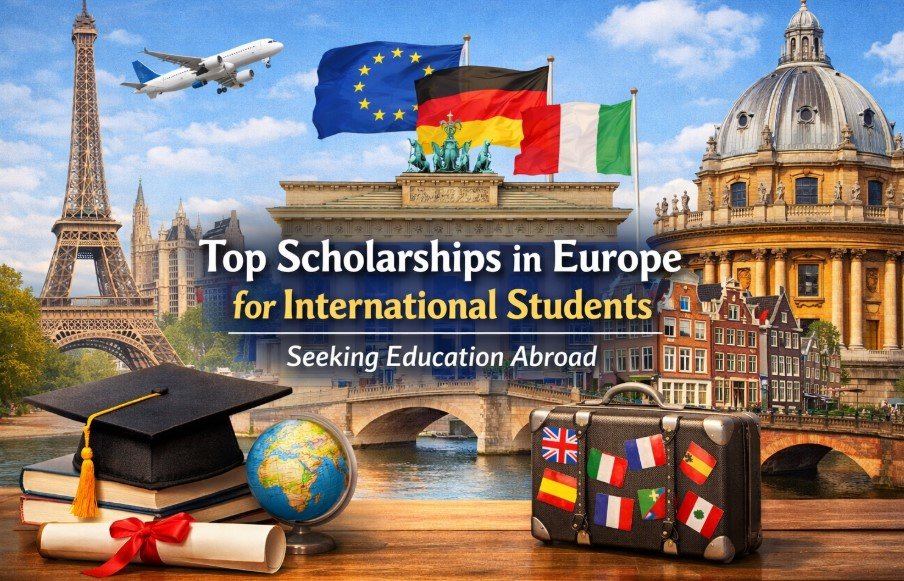
Scholarships in Europe for international students represent a golden ticket to some of the world’s most prestigious academic institutions and culturally rich landscapes.
As the 2026/2027 academic cycle approaches, the competition for these awards is intensifying, but the rewards, full tuition coverage, monthly stipends, and global networking, remain unparalleled.
Scholarships in Europe for international students are not merely financial aids; they are investments in future global leaders who bring diverse perspectives to European classrooms.
Whether you are aiming for a Master’s in the sustainable cities of Scandinavia or a PhD in the historic research hubs of Central Europe, understanding the nuances of these funding opportunities is the first step toward your education abroad.
Why Consider Scholarships in Europe?
Scholarships in Europe for international students are transformative gateways that extend far beyond mere financial relief.
While the immediate benefit of having your tuition fees covered or receiving a monthly stipend is undeniable, the long-term value lies in the prestige, the unparalleled academic quality, and the strategic career positioning that a European education provides.
In 2026, the continent remains the global gold standard for students who want to merge tradition with high-tech innovation without the burden of astronomical student debt.
Unrivaled Academic Excellence and Global Recognition
One of the primary reasons to pursue scholarships in Europe for international students is the sheer quality of the education system. Europe is home to some of the world’s oldest and most respected universities, many of which have been centers of innovation for centuries.
From the historic lecture halls of Central Europe to the cutting-edge research laboratories in the North, European institutions consistently dominate global rankings.
A degree earned here is not just a piece of paper; it is a globally recognized credential that signals to employers that you have undergone rigorous training under some of the brightest minds in your field.
Furthermore, the Bologna Process ensures that credits and degrees are compatible across the continent, offering you the flexibility to start a Master’s in one country and pursue a PhD in another with seamless transition.
Access to Cutting-Edge Research and Innovation Hubs
Europe is at the absolute forefront of global research, particularly in fields like Renewable Energy, Artificial Intelligence, Biotechnology, and Sustainable Urban Planning.
When you secure scholarships in Europe for international students, you often gain access to state-of-the-art facilities and generous research grants that are rarely available elsewhere. Many European governments heavily subsidize R&D, meaning universities are frequently partnered with major industry players.
As a scholarship recipient, you might find yourself working on a carbon-neutral housing project in Scandinavia or a medical robotics trial in Western Europe.
This “hands-on” research culture ensures that you aren’t just learning theory from a textbook; you are contributing to solutions for the world’s most pressing challenges.
Deep Cultural Immersion and Personal Growth
Beyond the classroom, scholarships in Europe for international students offer a life-changing cultural experience. Living in Europe means being a short train ride away from diverse languages, cuisines, and historical landmarks.
This environment fosters “global citizenship”, a trait highly prized in the modern workforce. Navigating a new city where the local language may not be your first, participating in centuries-old traditions, and making friends from every corner of the globe builds a level of resilience and adaptability that cannot be taught.
By the time you graduate, you won’t just have a degree; you will have a nuanced understanding of international relations and a multicultural perspective that will serve you for the rest of your life.
Strategic Career Launchpad and Post-Study Work Rights
Securing scholarships in Europe for international students is one of the smartest career moves you can make in 2026. Many European countries have introduced favorable post-study work visas, allowing graduates to stay for 12 to 24 months to find employment.
Because European markets are home to numerous Fortune 500 companies and a booming startup ecosystem, the transition from student to professional is often much smoother than in other parts of the world.
Employers are increasingly looking for “internationalized” resumes, and having a European scholarship on your CV acts as a stamp of excellence.
Whether you aim to work for a multinational tech giant or launch your own social enterprise, the professional networks you build during your scholarship period will provide a lifelong foundation for success.
Financial Freedom and Sustainability
Finally, the most practical reason to look for scholarships in Europe for international students is the ability to graduate debt-free. In many other popular study destinations, tuition and living costs can exceed $50,000 per year.
In contrast, many European scholarships, like the Erasmus Mundus or DAAD, cover 100% of these costs and even provide for travel and insurance.
This financial freedom allows you to focus entirely on your studies and research rather than juggling multiple part-time jobs just to pay rent.
It also means that upon graduation, your salary goes into your savings or your future business rather than into paying back student loans. For students from developing economies, this is often the only viable path to a world-class education.
Top Scholarships in Europe for International Students Seeking Education Abroad
As the academic landscape shifts towards 2026/2027, scholarships in Europe for international students have become the primary vehicle for ambitious scholars to access world-class research and cultural immersion.
The continent offers a tapestry of funding opportunities, ranging from government-backed national schemes to prestigious university-specific endowments.
For those seeking scholarships in Europe for international students, navigating the sea of deadlines and requirements is the first step toward a fully funded education abroad that promises not just a degree, but a global career foundation.
1. Erasmus Mundus Joint Masters (EMJM)
The Erasmus Mundus program remains the most sought-after of all scholarships in Europe for international students due to its unique mobility requirement.
Instead of studying in one location, scholars spend their degree at a minimum of two or three different universities across multiple European countries. The scholarship is incredibly comprehensive, covering 100% of tuition fees, providing full insurance, and granting a monthly allowance of €1,400.
For the 2026 cycle, applications typically open in late 2025. It is an ideal choice for students who want a truly “European” experience, as you might start your semester in France, move to Italy, and complete your thesis in Germany.
2. DAAD Development-Related Postgraduate Scholarships (Germany)
Germany’s DAAD scholarships are specifically designed for professionals from developing and newly industrialized countries. These scholarships in Europe for international students focus on “EPOS” courses, programs specifically curated to have a high impact on the student’s home country upon their return.
Recipients receive a monthly stipend (approx. €934 for Master’s and €1,200 for PhDs), travel grants, and health insurance.
A key differentiator for the 2026 intake is the requirement for at least two years of professional work experience, making this the premier choice for mid-career professionals looking to upskill in a powerhouse economy.
3. Chevening Scholarships (United Kingdom)
Chevening is the UK government’s international awards program aimed at developing global leaders. It is a “full-ride” scholarship, meaning it covers university tuition fees, a monthly living allowance, economy class return airfare to the UK, and additional grants to cover essential expenditure.
To win this award in 2026, applicants must demonstrate significant leadership potential and have at least 2,800 hours of work experience.
The networking opportunities are unparalleled, as Chevening scholars are invited to exclusive events at the Foreign, Commonwealth & Development Office and are part of a 55,000-strong alumni network.
4. France Excellence Eiffel Scholarship Program
The Eiffel Scholarship is a prestigious tool developed by the French Ministry of Foreign Affairs to attract top international talent.
Unlike many other scholarships in Europe for international students, you cannot apply for the Eiffel yourself; a French higher education institution must nominate you after you have been accepted into their program.
It provides €1,181 per month for Master’s students and €1,800 for PhD candidates. For the 2026 session, the focus remains on priority fields such as Biology and Health, Ecological Transition, Mathematics, and Digital Sciences, along with Law and Political Science.
5. Swiss Government Excellence Scholarships
Switzerland offers these scholarships to promote international exchange and research cooperation between Switzerland and over 180 other countries.
These are primarily focused on postgraduate researchers in any discipline (who hold a master’s degree as a minimum) who are planning to come to Switzerland to pursue research or further studies at the doctoral or post-doctoral level.
The monthly stipend is approximately CHF 1,920, and the award includes a mandatory health insurance contribution. Because Swiss universities like ETH Zurich are world leaders in STEM, these scholarships are highly competitive for scientists and engineers.
6. Swedish Institute Scholarships for Global Professionals (SISGP)
Sweden’s SISGP is uniquely aligned with the United Nations 2030 Agenda for Sustainable Development. It targets ambitious professionals from 41 eligible countries who have demonstrated leadership experience.
The scholarship is highly generous, covering full tuition, living expenses of SEK 12,000 per month, insurance, and a one-time travel grant.
For the 2026 entry, Sweden continues to prioritize applicants who can show how their chosen Master’s program will contribute to the sustainable development of their home country and region.
7. NL Scholarship (Formerly Holland Scholarship)
The NL Scholarship is intended for international students from outside the European Economic Area (EEA) who want to do their Bachelor’s or Master’s in the Netherlands.
While many scholarships in Europe for international students are full-ride, this is often a partial grant of €5,000, awarded in the first year of study.
It serves as a prestigious “welcome” grant that many students combine with other university-specific funding, such as the Radboud or Leiden Excellence scholarships, to cover their total costs in the innovative Dutch education system.
8. Gates Cambridge Scholarship (United Kingdom)
The Gates Cambridge Scholarship is one of the most prestigious international scholarships in the world. It is awarded to outstanding applicants from countries outside the UK to pursue a full-time postgraduate degree in any subject available at the University of Cambridge.
It covers the full cost of study: the University Composition Fee, a maintenance allowance of roughly £21,000 per year, and airfare.
The 2026 selection criteria focus on four pillars: academic excellence, a commitment to improving the lives of others, leadership potential, and a good fit between the applicant and the course.
9. Government of Ireland International Education Scholarships (GOI-IES)
Ireland has become a top-tier destination for those seeking scholarships in Europe for international students due to its English-speaking environment and booming tech sector.
The GOI-IES provides a €10,000 stipend for one year of study and requires the host university to provide a full tuition fee waiver.
This effectively makes the year fully funded. For the 2026 cycle, 60 scholarships are typically awarded to high-caliber students from non-EU/EEA countries who demonstrate a strong personal statement and academic record.
10. Stipendium Hungaricum Scholarship (Hungary)
Based on bilateral education agreements between Hungary and the governments of the sending countries, this program is incredibly diverse. It provides free tuition, a monthly stipend, accommodation contribution, and medical insurance.
For the 2026/2027 academic year, it remains one of the most accessible scholarships in Europe for international students, offering thousands of slots across various levels (Bachelor’s, Master’s, PhD, and non-degree). It is an excellent gateway into the heart of Central Europe.
11. VLIR-UOS Scholarships (Belgium)
Belgium’s VLIR-UOS program targets students from 30 partner countries in Africa, Asia, and Latin America. These scholarships are for “International Course Programmes” (ICP) which are Master’s programs focused on development-related topics.
The scholarship covers all costs, including a monthly allowance of €1,400. In 2026, Belgium continues to emphasize themes like sustainable development, human rights, and global health, making it a perfect fit for social scientists and development practitioners.
12. Invest Your Talent in Italy
This is a unique program that combines academic study with on-the-job training at Italian companies.
It is open to students from specific countries (including many in Africa, Asia, and the Americas) who wish to pursue Master’s degrees in Engineering, High Technologies, Economics, or Management.
The scholarship provides a monthly allowance of €1,000, tuition fee waivers, and a mandatory internship. It is arguably the best “career-first” scholarship in Europe, as it bridges the gap between university and the Italian labor market.
13. GREAT Scholarships (United Kingdom)
Jointly funded by the UK government’s “GREAT Britain” Campaign and the British Council, these scholarships offer £10,000 towards tuition fees for one-year Master’s programs.
For 2026, the program is open to students from various countries including Nigeria, India, Pakistan, and others.
While it is a partial scholarship, it is highly prestigious and can be used at dozens of universities across England, Scotland, Wales, and Northern Ireland, making it a flexible option for those targeting specific niche programs in the UK.
14. Finland Scholarships (National Program)
Finland has rapidly ascended the ranks as a top-tier destination for scholarships in Europe for international students, particularly those interested in technology, design, and social sciences. The national “Finland Scholarship” is a high-prestige award targeting the most talented non-EU/EEA students.
For the 2026 academic year, this scholarship is integrated directly into the university application process; when you apply for your Master’s degree via the joint portal, you can simultaneously opt-in for the scholarship.
It provides a 100% tuition fee waiver for the entire duration of your degree, plus a one-time relocation grant of at least €5,000 to help you settle into the Finnish lifestyle.
15. Estonia Government Scholarships
As one of the world’s most advanced digital societies, Estonia offers unique scholarships in Europe for international students who want to be at the center of the “E-Estonia” revolution.
Managed by the Education and Youth Board (Harno), these scholarships support Master’s and PhD studies across all disciplines, with a specific focus on cybersecurity, IT, and international relations. The funding typically includes a tuition fee waiver and a monthly stipend of roughly €350 for
Master’s students, though PhD candidates often receive significantly higher research-based salaries. For 2026, the application window usually centers around the autumn months, making it a critical choice for students who value an innovative, tech-forward, and entrepreneurial study environment.
Essential Requirements for the Scholarships in Europe for International Students
To secure one of the prestigious scholarships in Europe for international students, you must navigate a rigorous set of entry requirements. These criteria are designed to filter for academic excellence, leadership potential, and a clear vision for the future.
Understanding these “pillars of eligibility” is essential for any applicant aiming for the 2026/2027 academic cycle.
1. Exceptional Academic Standing and Transcripts
At the core of all scholarships in Europe for international students is a proven track record of academic achievement.
Most high-tier programs, such as the Eiffel Excellence or Erasmus Mundus, require a Bachelor’s degree with a high cumulative GPA (often the equivalent of a First Class or Upper Second Class degree).
You will need to provide official, stamped transcripts from every higher education institution you have attended. For the 2026 cycle, committees are increasingly looking at the relevance of your specific modules to the Master’s program you are choosing, not just the final grade.
2. Proof of Language Proficiency (English and Beyond)
Since most scholarships in Europe for international students fund English-taught programs, you must prove your ability to succeed in an intense academic environment. Standardized tests like IELTS (usually a minimum of 6.5 or 7.0) or TOEFL (90–100+) are almost always mandatory.
Even if you are a native speaker, some scholarships still require an official test score for administrative uniformity.
Furthermore, if you are applying for a scholarship in a country like Germany (DAAD) or France (Eiffel), having a basic level of the national language (A1/A2) is often a significant competitive advantage, even if the course itself is in English.
3. Professional Work Experience (For Specific Awards)
Certain scholarships in Europe for international students, specifically the Chevening (UK) and the Swedish Institute (SI), place a heavy emphasis on professional life.
For instance, Chevening requires a minimum of 2,800 hours of work experience, while the Swedish Institute looks for demonstrated leadership roles in your career.
This experience can include full-time employment, part-time roles, or even substantial internships. The 2026 guidelines suggest that your work history must align with your chosen field of study to show a consistent “career arc.”
4. Compelling Statement of Purpose or Motivation Letter
Arguably the most critical subjective document for scholarships in Europe for international students is the motivation letter. This is your opportunity to go beyond your grades and explain why you deserve the funding.
A winning letter for 2026 should be concise (typically 1–2 pages) and focus on three key areas: your past academic achievements, why the specific European university is perfect for you, and, most importantly, how you will use your education to benefit your home country or the global community upon graduation.
5. Standardized European-Format CV (Europass)
Presenting your history in a way that European admissions officers can easily digest is vital. Most scholarships in Europe for international students prefer the Europass CV format.
This standardized template ensures that your education, skills, and experience are listed in a logical, chronological order that aligns with European standards. It is highly recommended to keep your CV to two pages and use a clean, professional layout that highlights your “soft skills” alongside your technical qualifications.
6. Strong Letters of Recommendation (Academic and Professional)
You will generally be required to provide two to three letters of recommendation. For scholarships in Europe for international students, these should ideally come from professors who know your research capabilities or employers who can vouch for your leadership skills.
In 2026, many application portals are moving toward “automated references,” where your referee receives a link to upload their letter directly. Ensure your referees are aware of the deadlines and can speak specifically about your potential to handle a demanding international curriculum.
7. Research Proposal (For PhD and Research Fellowships)
If you are applying for a PhD or a research-heavy award like the Swiss Government Excellence Scholarship, a detailed research proposal is mandatory. This document must outline your research question, methodology, and the potential impact of your work.
Most importantly, you often need to have a Host Professor in Europe who has already reviewed your proposal and agreed to supervise you if you win the scholarship. Securing this “Letter of Support” is frequently the most time-consuming part of the application process.
8. Age and Nationality Constraints
While many programs have no age limit, some prestigious scholarships in Europe for international students are targeted at “young professionals.” For example, the Eiffel Scholarship generally requires Master’s applicants to be under 27–30 years of age.
Additionally, you must be a citizen of an eligible country; many scholarships are specifically earmarked for students from developing nations or non-EU/EEA countries to promote global diversity on European campuses.
Conclusion
Securing scholarships in Europe for international students is a marathon, not a sprint. The 2026 academic year offers a diverse array of funding, from the fully-funded “Global Professional” tracks in the North to the research-heavy fellowships in the Alpine regions. By matching your career goals with the specific mission of each scholarship, whether it’s leadership, research, or sustainable development, you significantly increase your chances of success.